.svg)

Why does contract value erode after the deal is closed?
At a recent KPMG and SimpliContract leadership session, experts identified the "post-signature execution gap" as the primary driver of financial loss. By leveraging contract intelligence, procurement leaders can now use AI to automate SLA monitoring, bridge the handoff between negotiators and execution teams, and track index-linked pricing in real-time. Discover how structured data and mNemoAI turn hidden contract risks into strategic sourcing advantages.
Procurement teams are not failing at negotiation or selecting the wrong suppliers. The gap almost always lies in what happens after the contract is signed. Value erodes quietly — through untracked obligations, pricing drift, invisible risk, and intelligence locked inside documents nobody reads after filing.
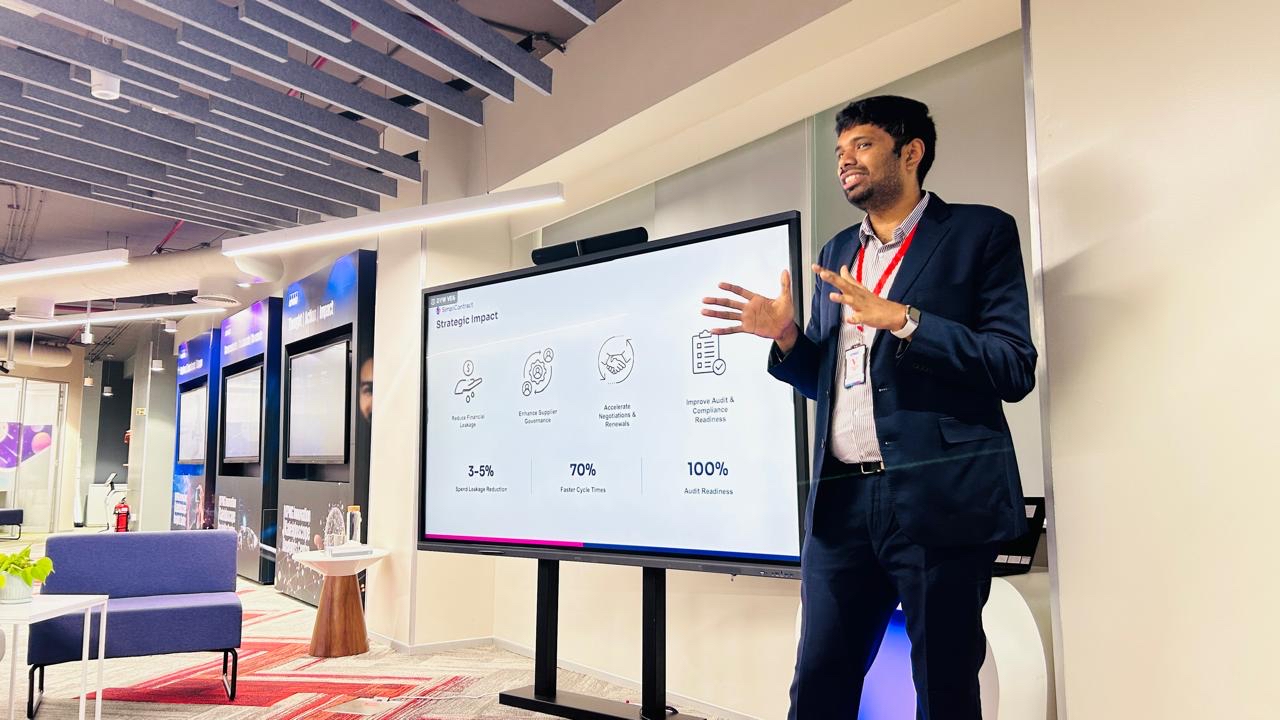
On 17 March 2026, SimpliContract and KPMG India brought senior procurement and commercial leaders together for a focused breakfast session titled 'Unlocking Contract Value Via AI.' What emerged confirmed a consistent market truth: the gap is in post-signature execution.
.jpg)
Below are five concrete, actionable ways to close it.
1. Get a Real-Time View of Every Active Obligation
How many active supplier obligations are you currently tracking — and which ones are overdue right now? For most leaders present, the honest answer involved a spreadsheet or an uncomfortable level of uncertainty.
A live demonstration showed every key clause — force majeure scope, take-or-pay clause, pricing adjustment terms, audit rights, indemnity provisions — extracted and summarized in seconds from a contract that would typically take hours to review manually.
An AI-powered contract intelligence layer transforms obligation visibility from a periodic report into a continuous, live state, accessible to procurement, legal, operations, and finance simultaneously — connected directly to systems teams already use: SharePoint, Ariba, and existing ERP repositories.
“We had seven supplier obligations breach in one quarter. We only found out about three of them at the time.” - Attendee
2. Bridge the Gap: AI-Assisted Handoff to Execution
Negotiators know the "why" behind every hard-fought clause, but execution teams often inherit the "what" without context. This disconnect is a primary driver of post-signature value leakage.
SimpliContract’s Contract Intelligence—powered by mNemoAI—structurally fixes this handoff with three non-negotiable elements:
- Plain-Language Summaries: mNemoAI converts dense legal jargon into clear commercial terms, giving execution teams instant visibility from day one.
- Structured Obligation Ownership: Extract and assign material obligations at activation, so responsibilities are clear—not discovered at the point of breach.
- Seamless Workflow Integration: Automatically draw milestones, SLAs, and deadlines directly from the contract and enter them into your tracking systems/platforms— eliminating manual re-keying and ensuring what was negotiated is actually realized.
3. Monitor Pricing Compliance in Real-Time with RateIQ
Pricing drift accumulates invisibly. By the time an audit surfaces the gap, the leakage is often unrecoverable. SimpliContract’s RateIQ, powered by mNemoAI, shifts the focus from retrospective auditing to proactive monitoring.
- Automated Rate Validation: mNemoAI identifies when invoice pricing deviates from contracted rates. RateIQ triggers alerts the moment a discrepancy exceeds your defined tolerance, stopping leakage before payment.
- Dynamic Volume & Rebate Tracking: Eliminate manual spreadsheets with real-time tracking of volume thresholds. RateIQ ensures rebate or discount mechanisms are activated automatically as soon as targets are met.
- Index-Linked Price Monitoring: mNemoAI monitors price escalation clauses against commodity or freight indices. It flags exactly when triggers are hit, giving procurement the data to renegotiate before costs are absorbed.
“By the time we ran a pricing compliance review, 14 months had passed. We found material variance throughout. Most of it was unrecoverable.” -Attendee
4. Treat Contract Risk as a Live Operational Issue
Global disruptions — like supply chain shocks from geopolitical events — can hit contracts within hours. When that happens, you need to know immediately: which contracts protect you, which suppliers are in breach, and whether any force majeure notice windows are counting down. Miss a 14–28 day notice deadline and the right to claim relief is gone.
The fix: Maintain a live contract risk register, set automated alerts for time-sensitive obligations, and bring procurement, legal, and operations into a shared view of current exposure — on a regular basis, not just during an annual audit.
5. Use Contract Intelligence as a Strategic Sourcing Input
The most significant shift presented was contract intelligence not as a compliance layer but as a forward-looking sourcing input. Before opening a negotiation or renewing with an existing supplier, procurement teams can draw on structured intelligence directly from their existing contract base:
- Where has this supplier consistently underperformed against contracted SLAs, and how does that inform our negotiation leverage?
- Which commercial terms have we conceded repeatedly that we should standardize and defend?
- Which contracts are coming up for renewal in the next 90 days, and where do we have runway to build leverage?
- Which suppliers show a pattern of pricing drift or missed volume commitments that need proactive address?
This is what it looks like when contract data works for you, rather than sitting in a system nobody opens until something goes wrong.
The Common Thread
Across all five areas — obligation visibility, handoff protocols, pricing compliance, contract risk, and category intelligence — the session returned to the same structural point: the intelligence is already there, inside every signed supplier agreement your organization has ever executed. The question is whether it is accessible, and whether it reaches the people who need to act on it at the moment they need to act.
The organizations in the strongest commercial position coming out of the current disruption environment will be the ones whose procurement teams knew what their contracts said before the cost landed. Not after.
Unlock the full value of your contracts.
If any of these five areas reflect challenges in your organization, the SimpliContract team would welcome a direct conversation. We offer a focused 20-minute session to show exactly how the platform works against your own contract base.
About the Event
'Unlocking Contract Value Via AI' was a breakfast networking event co-hosted by SimpliContract and KPMG India on 17 March 2026. The session brought together senior procurement and commercial leaders for a closed-group discussion and live platform demonstration covering contract obligation management, pricing intelligence, supplier risk monitoring, and the role of AI — including SimpliContract's mNemoAI architecture — in transforming contracts from static documents into live commercial assets.
Quick Glance
TL;DR
How can procurement teams unlock contract value? This blog outlines five practical steps: gain real-time visibility into obligations, improve handoffs from negotiation to execution, monitor pricing and rebates in real time, treat contract risk as an operational issue, and use contract intelligence to strengthen sourcing decisions.