.svg)


Energy Costs are Rising, but how can the AI-Native Contracting System help procurement teams stay in Control?
-A Real-Time Scenario in today’s Geopolitical Crisis
With oil and gas price volatility, manufacturing, logistics, and supplier SLAs are under inflationary pressure. The ripple effects are being felt alike in boardrooms, supply chains, and contract negotiations. Procurement teams need to rethink how they negotiate, manage, and monitor contracts in a world where rising energy costs are no longer just a line item but a strategic risk. It's high time to reassess how your contracts are structured, fast.
The Pressure of Energy Price Volatility
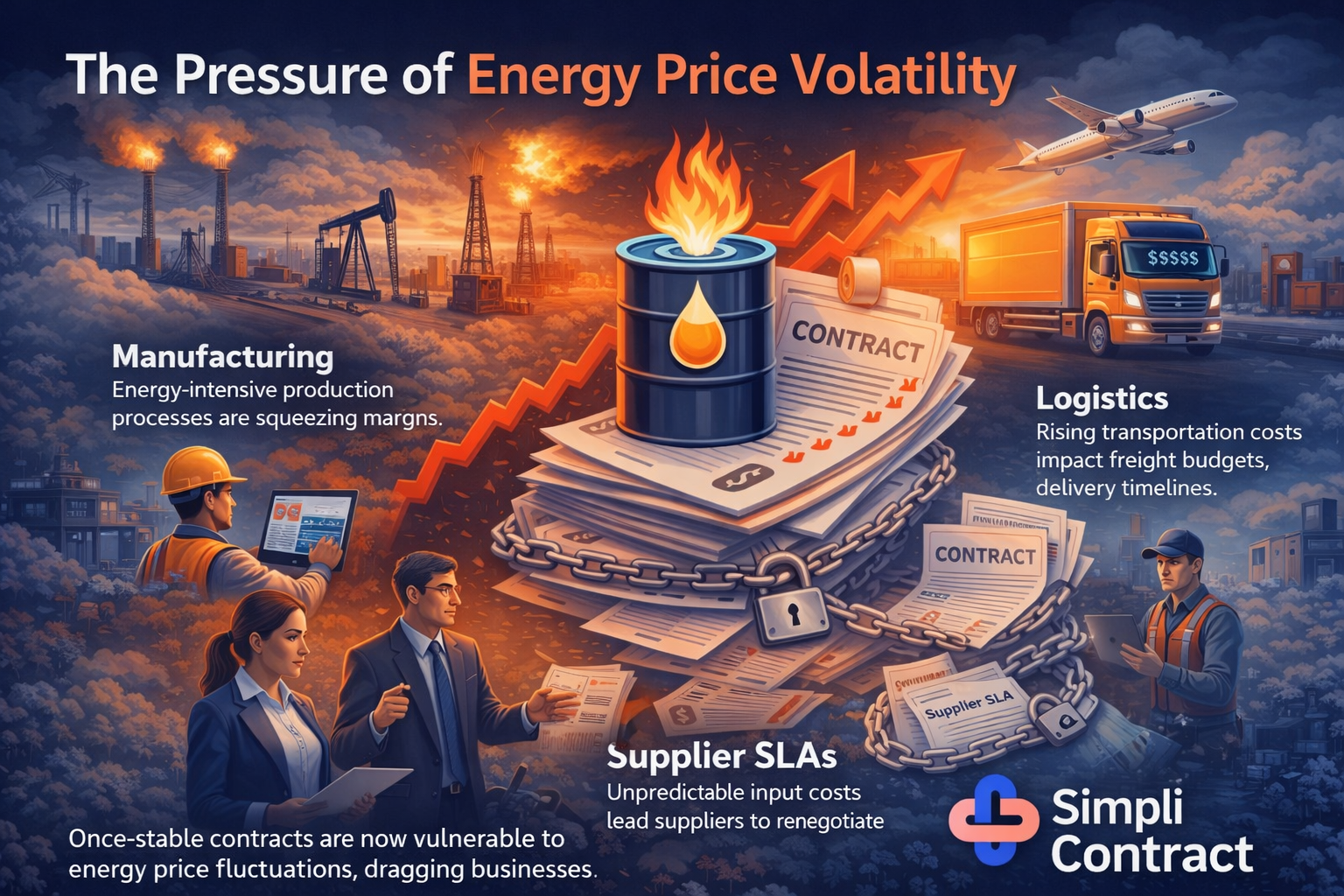
The global energy landscape is undergoing seismic shifts. Geopolitical tensions, climate policies, and fluctuating demand have made oil and gas/energy price volatility the new normal. This unpredictability doesn’t just affect fuel costs, but it cascades into every corner of operations, such as:
- Manufacturing - Energy-intensive production processes are squeezing margins, becoming more expensive.
- Logistics - Transportation costs surge with fuel price hikes, impacting freight budget, delivery timelines.
- Supplier SLAs – SLAs( Service Level Agreements) are harder to maintain when suppliers face unpredictable input costs. Suppliers are renegotiating terms.
Thus, once stable contracts are now vulnerable to the whims of the energy market. The energy price volatility is reshaping how businesses operate, and how they contract – dragging manufacturing and logistics under inflationary pressure, turning once-tablecontracts into liabilities for procurement teams.
Contracts Under Pressure: Where the Cracks Are Showing
If your contracts don’t account for the above shifts, you are exposed to risks.
Inflation is the silent killer of procurement value. Energy costs are a major driver of inflation, which erodes purchasing power and inflates supplier pricing. Procurement teams are facing:
- Escalating input costs across categories like logistics, raw materials, and manufacturing.
- Renegotiation pressure from suppliers who can’t absorb energy hikes.
- Compliance challenges as sustainability goals clash with cost realities.
Let’s break down the impact across key contract areas and suggestions to solve:
1. Fixed-price agreements
Problem: Suppliers locked into static pricing are absorbing losses or walking away.
Solution: Introduce indexed pricing tied to energy benchmarks like Brent Crude or regional electricity indices.
2. SLAs and performance metrics
Problem: Fuel surcharges and delays are causing SLA breaches.
Solution: Build tiered SLAs with flexibility for energy-related disruptions.
3. Inflation clauses
Problem: Contracts without ‘inflation adjustment mechanisms’ are losing value.
Solution: Add CPI (Consumer Price Index)-linked clauses or energy-specific inflation triggers.
4. Risk- management
Problem: Adversarial supplier relationships during cost spikes.
Solution: Adopt collaborative frameworks, risk analyzer that share cost burdens and incentivize transparency.
What Procurement Teams Should Do Now
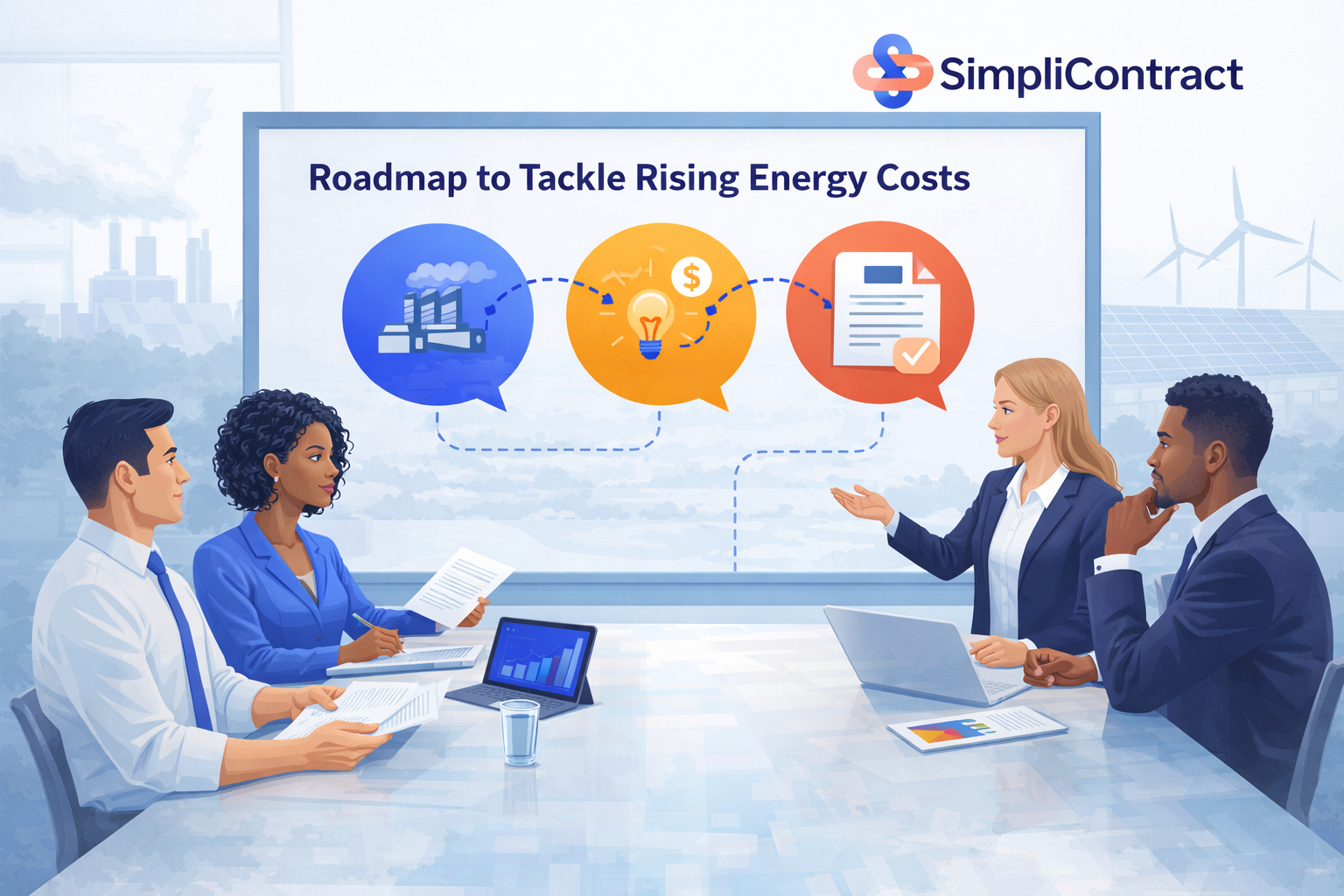
Here’s a practical roadmap for procurement leaders:
Note: SimplIContract’s AI-native platform with three integrated modules helps procurement teams solve the above-mentioned challenges. See how
SimpliContract’s Role in Energy-Aware Procurement
SimpliContract is a strategic enabler for procurement teams navigating energy volatility. Here’s how:
- Clause Intelligence: Identify energy-related risks across thousands of contracts in minutes.
- Negotiation Support: Use AI to simulate pricing scenarios and supplier responses.
- Sustainability Alignment: Track renewable energy commitments and ESG clauses.
- Real-Time Dashboards: Monitor contract performance, inflation impact, and SLA compliance.
Whether you’re managing logistics contracts or sourcing raw materials, SimpliContract’s contract intelligence platform helps procurement teams move from reactive to proactive.
SimpliContract packs modern-day features and functionalities that remarkably simplify the contract execution journey.
-Ranajay Sen, Finance Manager, Flipkart
Contracts Must Be as Dynamic as the Market
Rising energy costs aren’t a temporary spike but a structural shift and a major blocker for smooth workflow. Procurement teams must evolve their contract strategies to reflect this new reality. Static contracts are liabilities. Dynamic, data-driven agreements are the future.
SimpliContract acts as a strategic enabler for procurement teams navigating market instability. By utilizing clause intelligence, teams can instantly extract and audit risk exposure to rising energy costs. The platform's real-time dashboards monitor contract compliance, inflation impact, and sustainability alignment, ensuring renewable energy commitments are met even amidst cost pressures
Book a demo to see how SimpliContract helps procurement teams shield agreements from rising energy costs.
TL;DR
Procurement teams manage rising energy costs by transitioning from static agreements to dynamic contracts powered by SimpliContract’s AI-native platform. With AI-native insights, organizations can shift from static agreements to dynamic, data-driven contracts that adapt to energy volatility.in other words, by automating inflation adjustment mechanisms and implementing indexed pricing, procurement teams protect margins against energy price volatility while ensuring total contract compliance and operational sustainability.