.svg)

Every procurement leader may have lived this moment: a vendor calls to renegotiate pricing, and no one on the team can confidently say when the contract expires, what the auto-renewal clause says, or whether performance benchmarks were ever met. The contract exists, somewhere, but visibility into it? Almost none.
This isn't a rare edge case. It's one of the most pervasive and quietly expensive problems in modern procurement. And the root cause isn't a lack of effort — it's a structural gap between how contracts are created and how they're actually used.
The Illusion of Having Contracts "Under Control"
Most procurement teams believe they have a handle on their contracts. They have a shared drive. Maybe a spreadsheet. Some teams even have a basic repository. But having contracts stored is not the same as having contract visibility.
Contract visibility means knowing — at any given moment — what obligations exist, when key dates are approaching, what rights your organization holds, and whether vendors are delivering on what they promised. It means your procurement team can answer critical questions in minutes, not days.
The gap between storage and visibility is where procurement teams lose millions of dollars every year through missed renewals, uncaptured savings, and unnoticed compliance drift.
Why Contract Visibility Breaks Down for Procurement Teams
1. Contracts Live in Silos
In most organizations, contracts are created by legal, signed by executives, stored by IT, and managed by procurement — with each function using different tools and naming conventions. A master service agreement (MSA) might sit in a legal folder, while its amendments live in a procurement inbox, and the SOWs are buried in a project manager's desktop.
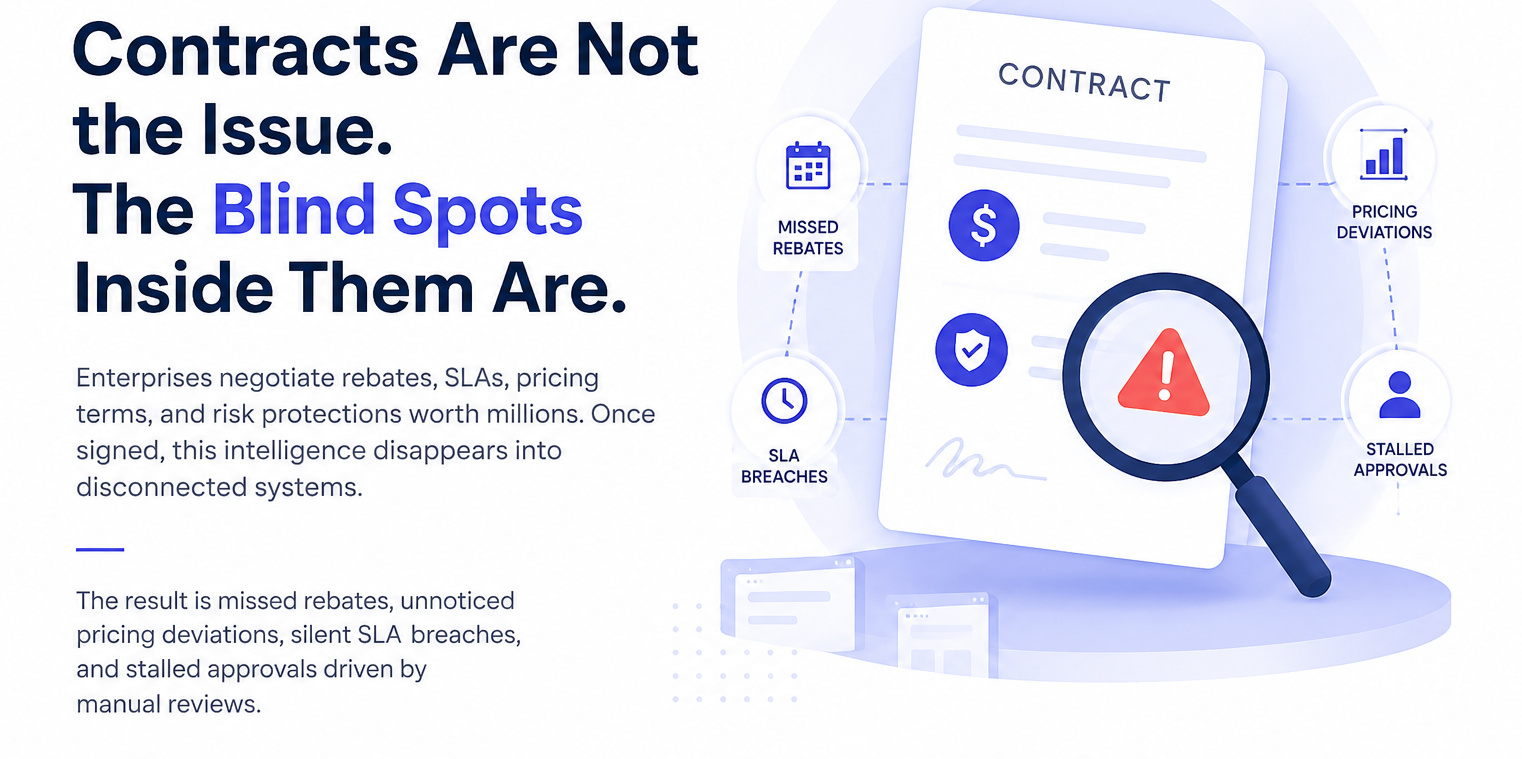
When visibility depends on a person knowing where to look rather than a system surfacing the right information, the inevitable result is blind spots. Contracts are not the issue. The blind spots inside them are.
2. Unstructured Data Doesn't Answer Questions
A PDF contract is not searchable in the way a procurement team needs. You can search for a word, but you can't ask: "How many contracts are auto-renewing in the next 90 days?" or "Which of our 200 supplier contracts have payment terms beyond Net 60?"
Without structured extraction of key contract data — parties, dates, obligations, penalties, payment terms — procurement teams are left manually reading documents to answer questions that should take seconds.
3. Volume and Complexity Scale Faster Than Teams
As organizations grow, contract volumes explode. A mid-sized company managing 500+ supplier contracts with a lean procurement team of five people cannot manually track every obligation, deadline, and clause variation. The math simply doesn't work. And yet, many teams still rely on manual tracking processes built for a fraction of their current contract load.
4. No Alerts, No Proactive Intelligence
The traditional contract management model is reactive. Something goes wrong — a vendor underperforms, an auto-renewal triggers, a compliance deadline is missed — and the procurement team scrambles to understand the contractual position. There's no system proactively surfacing what needs attention before it becomes a crisis.
5. Lack of Cross-Functional Access
Procurement isn't the only team that needs contract data. Finance needs payment terms. Operations needs delivery commitments. Compliance needs regulatory clauses. When contracts are locked in procurement-only systems — or worse, inboxes — critical information doesn't reach the people who need it, creating risk across the business.
The Real Cost of Poor Contract Visibility
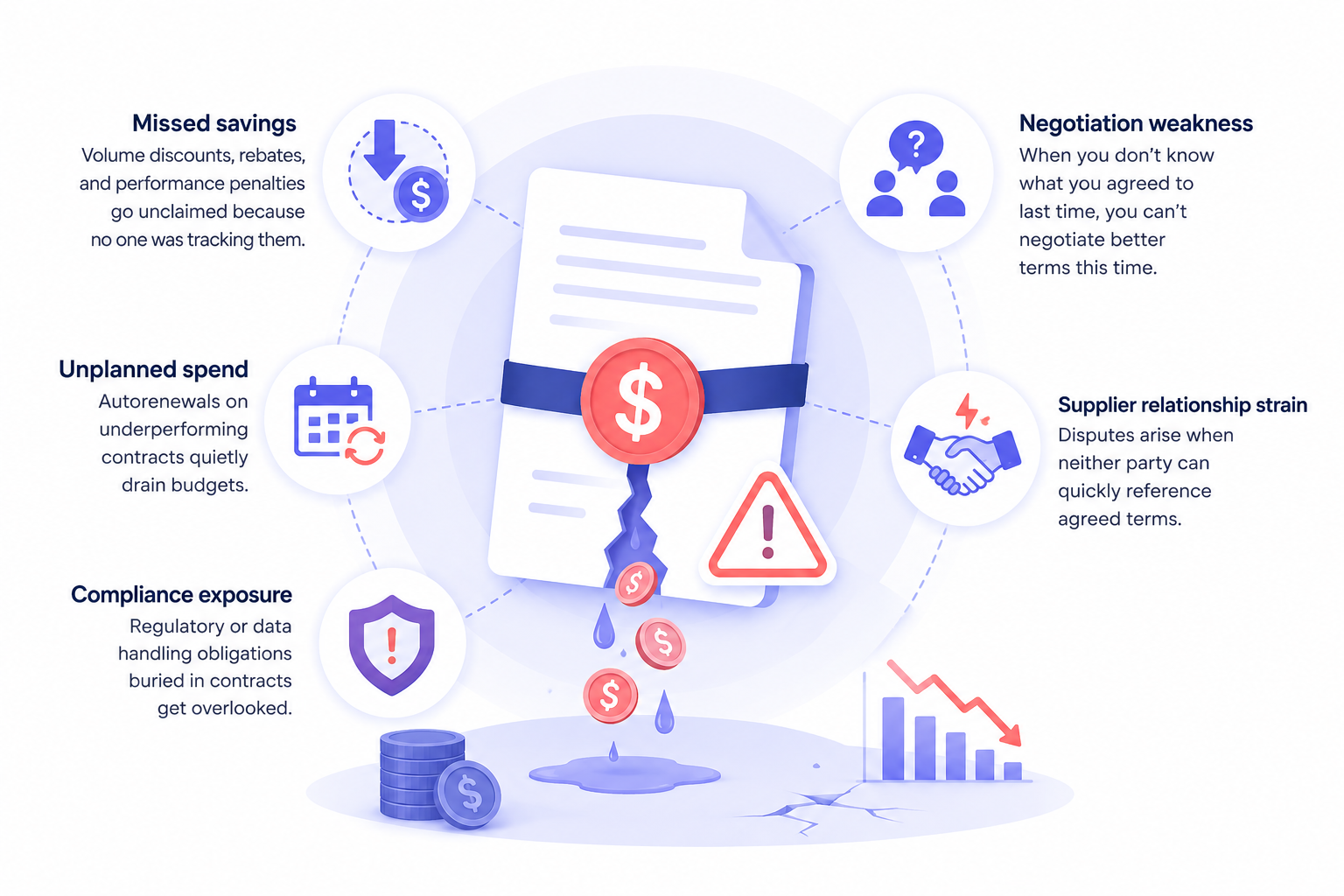
Poor contract visibility isn't a process inconvenience. It has a direct financial cost. Industry research consistently points to 5-9% of contract value lost annually through missed rebates, untracked renewals, and compliance drift. For a mid-to-large enterprise managing hundreds of supplier agreements, that is not a rounding error.
How SimpliContract's Contract Intelligence Changes the Game
This is precisely the problem SimpliContract's Contract Intelligence module was designed to solve — not just by storing contracts, but by making them genuinely visible, queryable, and actionable for procurement teams.
AI-Powered Data Extraction: SimpliContract automatically extracts and structures critical metadata from every contract — parties, effective dates, expiry dates, renewal terms, SLAs, payment conditions, and custom clauses — turning unstructured documents into a queryable database of obligations and rights.
Smart Alerts and Deadline Tracking: Procurement teams get proactive notifications for renewals, expirations, and obligation milestones — weeks or months in advance, not the day after something was missed. The system works for you, not the other way around.
Obligation and Compliance Tracking: The Contract Intelligence module maps out what your organization owes and what suppliers owe in return, with real-time tracking against delivery. If a vendor is behind on commitments, procurement knows before it becomes a dispute.
Cross-Functional Visibility: With role-based access, finance, legal, operations, and compliance teams can view the contract data they need — without procurement becoming the bottleneck for every contract inquiry.
Intelligent Search and Reporting: Ask the system a business question and get a structured answer. No more manual document reviews. Procurement leaders can generate risk reports, deviations, spend exposure summaries, and upcoming renewal dashboards in minutes.
The Visibility Edge: Turning Trapped Contract Data into Strategic Profit
Achieving true contract visibility isn't just about avoiding missed deadlines. It's a powerful competitive differentiator. With the right contract visibility software, procurement teams shift from a reactive cost center to a proactive driver of value. By replacing legacy tracking methods with intelligent, automated tracking visibility, enterprises can unlock hidden savings, capture missed rebates, and maintain total supplier visibility.
The contracts already exist within your organization. The choice is whether you will continue guessing in the dark or leverage clear, data-driven insights to negotiate from a position of strength.
Ready to close the contract visibility gap? SimpliContract's Contract Intelligence, powered by mNemoAI™, gives procurement teams the visibility they've always needed — built for the volume and complexity of modern supplier relationships. Contact our solution experts for stepwise guidance.
TL;DR
Procurement teams struggle with contract visibility because contracts are scattered across systems and platforms, stored as unstructured PDFs, spreadsheets, and scanned images, and usually managed through manual processes that cannot scale. SimpliContract's AI-native Contract Intelligence platform centralizes contracts, extracts key obligations and renewal data, enables proactive alerts, and gives procurement teams real-time visibility into supplier commitments, risks, and savings opportunities.